Regional Whale Watching 1
About This Course
Introduction
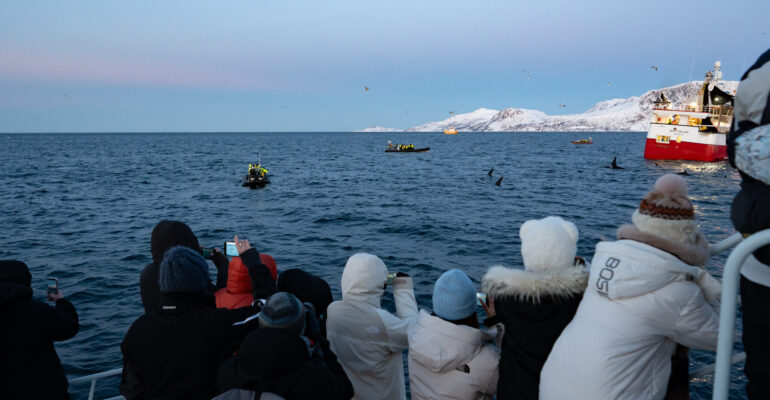
A course that reviews the basic topics for guiding whale watching tours in Northern Norway, complemented with lectures to hear the latest updates from local researchers.
The course is divided into three parts: knowledge of nature and the social context, guiding skills, and science and collaboration.
Workflow
Before the training, registered participants will have access to digital learning materials so they can start learning on their own.
The course will take place on the given dates at Polaria, where participants will review their knowledge.
A few days after the course, there will be a theoretical exam at the same venue. Passing the exam is mandatory to receive the recognition.
You can learn more about the recognition here.
Lectures and Conferences
See the curriculum section.
Exam
A theoretical exam will allow you to demonstrate your knowledge of the subjects. Participants are not expected to know everything, but they should know the most important things and where to find the details.
Schedule
Course: From the 16th to the 19th of November, 18:00–21:00.
Exam: 23rd of November
The lectures will also be broadcast live online for participants outside Tromsø.
An in person exam will also take place in Skjervoy if there are participants living there during the course. Date of this is to be confirmed later.
A detailed schedule of the lectures will be sent to participants before the course. There will be breaks during the lectures.
Dates
Course: 16th to 19th of November 2026
Exam: 23rd of November
Prices
- Standard price: 3,000 kr
- Price with subsidy from Troms Fylkeskommune: 1,500 kr
- TGF member’s price: 750 kr
Learning Objectives
Target Audience
- Guides at the beginning of their career who want to make sure they have the absolute minimum knowledge to start guiding.
- Guides who have guided before but want to reinforce their knowledge and connect with peers from the region.
- Companies who want to complement the in-house training of their guides.
Curriculum
Arctic Marine Ecosystem
Arctic Marine Ecosystem
Marine Mammals in Northern Norway
Toothed Whales
Baleen Whales
Fishing and Whaling
Sea Birds in Northern Norway
Whale Watching Guiding Skills
Guiding on Vessels
Guiding on RIB Boats
Guidelines and Code of Conduct
Collaborative Project
Norwegian Orca Survey
Your Instructors

Tromsø Guideforening
See more
Carolin Kornelia Fenzel
Master student in Marine Biology and whale watching guide in Northern Norway with focus on science communication, conservation and awareness.
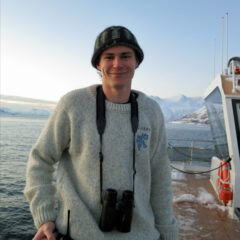
Connor McGarry
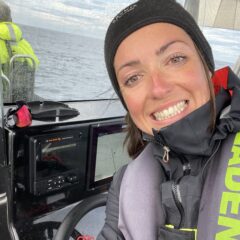
Eve Jourdain
Eve Jourdain is a marine ecologist and founder of the Norwegian Orca Survey (NOS). She has led long-term research on Norwegian killer whales since 2013, focusing on their ecology, behaviour, diet, population dynamics, and conservation. She holds a PhD in marine ecology and is affiliated with the University of Oslo, where her research integrates field observations, photo-identification, ecological modelling, and physiological markers to better understand killer whale populations and inform marine conservation.
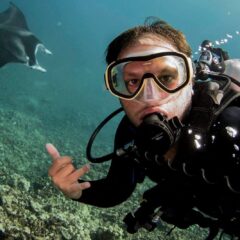
Lorenzo Ragazzi
Biologist and neuroscientist with background in animal physiology, behaviour and neuroscience. MSc in Arctic Animal Physiology at UiT, studying diving physiology and neurobiology in marine and diving animals, including hooded seals and eider ducks. PhD in neuroscience and behavioural neuroscience at UiT and the University of California, San Diego. Currently working at UiT, combining research, teaching and practical experience in comparative medicine and animal research.
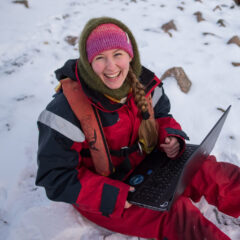
Lucia Karoline Mandelkow
Biology Student, Head of Whale Department at Destination Tromsø, 8 years as a guide (5 as a whale guide).
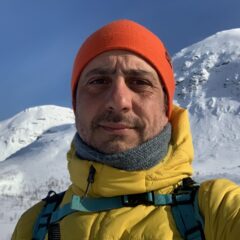
Luís Dias
Luís Dias is a marine biologist based in northern Norway, originally from Portugal. He works as an ocean skipper and whale-watching captain, combining his scientific background with hands-on experience at sea. Luís has held academic positions as a professor at the University of Madeira and as a researcher at the Universities of the Azores and Algarve. He has also worked as a travel and tourism consultant, developing nature-based tourism experiences that connect people with the ocean through science and education. Alongside his professional work, Luís is a dedicated nature and underwater photographer and an avid birdwatcher, reflecting a lifelong commitment to wildlife and the natural world.
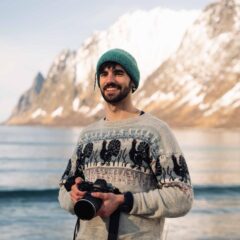
Samuel Llobet
Samuel works on research on marine mammal ecology at the Norwegian Polar Institute, specializing in acoustics in the polar region. He's participated in different types of fieldwork in Antarctica and the Arctic, from boat and aerial-based surveys of marine mammals and seabirds to capturing and marking seals or recording underwater sounds. He's an enthusiastic photographer.